Showing posts with label Theories. Show all posts

Tuesday, 23 September 2014

Jacques Derrida

Jacques Derrida was a French philosopher.  He is well known for his semiotic form of analysis(deconstruction) and as one of the main person that is associated with post-modernisms
“The center is not the center. The concept of a centered structure…is contradictorily coherent. And, as always, coherence in contradiction expresses the force of desire.”
Here Derrida is connoting that there is no normal and normal doesn't actually exist in the natural world, the idea of normal is created to make sense to people. Reflecting to post-modernism centre is never actually found as when you think you have found it, it moves which thereby means there is no centre. For example when you listen to a song you may think its an original but later you find out that the rhythm or some parts of the lyrics is the same as other songs.

Intertexuality

Many music videos take their inspiration from cult movies. Intertexuality (to be inside another text) ironically 'cult status' is usually awarded to a movie due to the fact that it is post modern. 
There are three types of intertexuality:
1)Homage-Imitation is the highest form of flattery.
2)Pastiche- Using the imagery of one text to make a comment about another.
3)Parody- Taking the mickey.

                            
Madonna's Material Girl(1985) was a parody of Marilyn Monroe's music video scene in the film 'Gentlemen prefer blondes'(1953).The intertexuality reference here isn't of Monroe but of a archetype of, blonde haired, Hollywood women using their looks to get what they want. The clear reference of Marilyn's ''Diamonds are forever'' is shown in Madonna's music video. This is done through the mise-en-scene of the way she has been dressed

 and the setting of the scene. The video also amplifies the archetype of Hollywood women by men surrounding her and doing what wants them to.


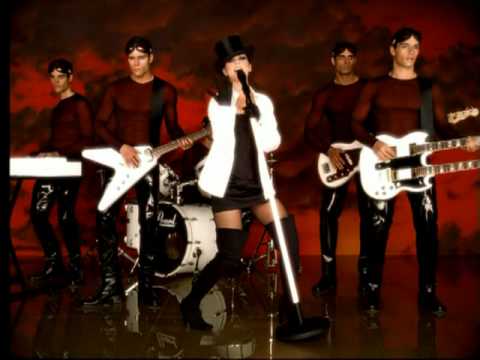
Robert Palmer's 'Addicted to love'(1986) had been parodied a lot by the use of female mannequin style. This style was then copied by Shania Twain for 'Man I feel like a women'(1999).

Television can be another example of an intertexual reference. For example, the music video 'Sabotage' by an American Hip-hop group of Beastie Boys directed by Spike Jonze in 1994 consists of intrertexuality reference through homage and parody of 70's television crime series such as 'Starsky and Hutch' and 'Hawaii five-0'; the opening of the music video connotes 70's style police series.
                            

Post modernism

22/09/14
There is no precise answer to post modernism; it is basically everything. It consists of a new spin on something old therefore nothing new is original. It is used to describe anything that looks culturally avant garde in an old school way. It is a short cut way to mass audiences. The dictionary definition for post modernism is " a style and concept in the arts characterized by a distrust of theories and ideologies and by the drawing of attention to conventions."


To look at genres in media studies, there is a theory that suggests that genre go in cycles:

1)Experimental------------------------> 2)Post-modern ---------------------------> 3)Cannon


~The experimental stage of genre attempts to establish trends.

~The cannon stage works within those trends to fix them into our cultural understanding.
~Post modernism look at those trends, pastiche them and creates something out of them. Thereby creating new experimental stage.


It can be argued that music video is a post-modern stage of evolution of cinema:

1)Short silent films------------------> 2)Full length talkie films----------------->3)music videos


Post modernism is all about idea of creating something new by referring to the old: created by copying. It can be humorous or terrifying and can be made by anyone which therefore means it is democratic. For example vine.

Monday, 15 September 2014

The culture industry- Adorno and Horkeimer's

10/09/14
The culture industry is a term created by Theodor Adorno and Max Horkheimer. The term is to connote cultural items(artists) all being produced in a similar or the same way. This is simply due to the reason of artists being under a commodity of having no control on what they want to become; artists are products simply produced to make money by appealing to their consumers. 


The idea of 'cultural industry' was linked to the idea of 'mass culture' where cultural production had become a routine. Adorno and Horkeimer argued that products created by the culture industry exhibited as standardised features thereby considered to be the normal. Capitalists have influenced the production of artists in to just caring about the profit. This is done by an artist becoming successful and famous by turning into something they know that will appeal to the audience and intrigue them into consuming their goods such as soundtracks, concert tickets and merchandise. 


Adorno noted that songs that became successful over time were put into the category of 'standard' therefore being classed as normal. He argues the idea of that there is nothing amazing about the process of cultural production and that it has become a routine of operation.


As a result of 'cultural industry' everything is mechanical and easily manipulated, by capitalist and cooperation and authoritarian governments. The cooperation becomes standardized and 'mass culture' everyone's same.


It is important to understand the culture industry as it gives you an idea of existing artists that are in the mainstream. I feel that it is something to consider and think about when creating me own artist. The artist may be a mainstream artists in which fits into the culture industry or the artist may be a very unique independent in which goes against the standardised idea. This theory allows me to think about what i want my artists to be and compare the artists that already exist.


Learning about this theory in class and researching examples is helpful because it teaches me more about the music industry. Whilst we want our artist to have an alternative element, this theory shows that in order to make her successful we have to obey certain genre characteristics. If we make her too different, she won't be mainstream. This is something we will consider when coming up with both our artist and target audience.

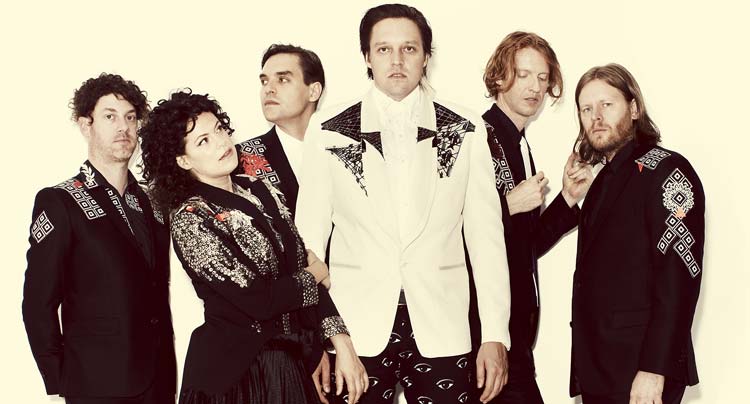
People argue that all popular artists in the music industry are an example of capitalism, however I go against this argument. I feel that not all artists are manufactured in any way through capitalism. For example the indie rock band Arcade Fire have not completely resulted into the culture industry theory as they first started off as an independent band creating music which is said to be at the 'experimental' stage. They were and still are free in making their own sound and do by perusing their passion of creating experimental music. It was only when they were founded by their classmates Win Butler and Josh Deu that they became part of the music industry. Their experimental music became famous and considered as 'normal' due to it being popular.

Wednesday, 10 September 2014

Andrew Goodwins

08/09/14 
Andrew Goodwin's Music Video Analysis
Andrew Goodwin wrote a book 'Dancing in the Distraction Factory' (Routledge 1992) in which consisted of the rules, codes and conventions which should be included in music videos.
1-Music videos demonstrate genre characteristics.(e.g stage performance in rock video, dance routine in pop etc)
2-There is a relationship between lyrics and visuals.
3-There is a relationship between music and visuals.
4-The demands of the record label will include the need for lots of close ups of the artist and the artist may develop motifs which recur across (illustrates, amplifies and contradicts).
5-There is frequently reference to notion of looking (screens within screens, telescopes, etc) and particularly voyeuristic treatment of the female body).
6-There is often intertextual reference (to films, tv programmes, other music videos etc).